
![[2025 September-August 2026 Sunday 9am High Altar] Rite II Sung Mass with Contemporary Language](https://stc-media-live.storage.googleapis.com/wp-content/uploads/2024/11/elevation-at-the-9am-service-on-palm-sunday-e1781104092498-150x150.jpg)
![[July 2025 - June 2026] Nursery](https://stc-media-live.storage.googleapis.com/wp-content/uploads/2026/06/nursery-quiet-area-featured-image-150x150.jpg)
![[2026] Coffee Hour following the 9am Sung Mass](https://stc-media-live.storage.googleapis.com/wp-content/uploads/2026/01/coffee-hour-150x150.jpg)

![[June 28 2026 Sunday] Solemn Eucharist](https://stc-media-live.storage.googleapis.com/wp-content/uploads/2025/09/red-vestments-ambulatory-feaured-image-150x150.jpg)
![[2026] Coffee Hour following the 11am Eucharist](https://stc-media-live.storage.googleapis.com/wp-content/uploads/2026/01/lady-chapel-coffee-hour-150x150.jpg)

![[June 28 2026 Sunday Template] Festal Evensong and Benediction](https://stc-media-live.storage.googleapis.com/wp-content/uploads/2023/11/kneeling-before-the-monstrance-e1763902669378-150x150.jpg)
![[June 10 2026 Weekday 5:30] Said Mass (Traditional Language)](https://stc-media-live.storage.googleapis.com/wp-content/uploads/2020/08/Eucharistic-Elevation-in-the-Chantry-Chapel-e1724346438206-150x150.jpg)
![[July 1 2026 Weekday 5:30] Said Mass (Traditional Language)](https://stc-media-live.storage.googleapis.com/wp-content/uploads/2021/01/The-Vigin-Mary-with-the-Christ-Child-in-the-West-Lancet-of-the-Goodness-and-Gentlness-Chantry-Chapel-Window-Featured-Image-e1717187301824-150x150.jpg)
![[July 2 2026 Weekday 5:30] Said Mass (Traditional Language)](https://stc-media-live.storage.googleapis.com/wp-content/uploads/2022/08/Wedding-at-Cana-in-the-Chantry-Chapel-Featured-Image-150x150.jpg)
![[2026 Holiday] Open Doors](https://stc-media-live.storage.googleapis.com/wp-content/uploads/2021/10/Kah-Wai-Interior-Featured-Image-e1720995151401-150x150.jpg)
![[2026] The Rosary and Shrine Prayers](https://stc-media-live.storage.googleapis.com/wp-content/uploads/2020/06/Rosay-250x250.jpg)
![[2025 Saturday Marian] Holy Eucharist (Saturday Memorial of the Blessed Virgin Mary)](https://stc-media-live.storage.googleapis.com/wp-content/uploads/2020/06/Mary-with-Child-Carving-Background-e1724266005809-150x150.jpg)
![[July 2025 - June 2026] Nursery](https://stc-media-live.storage.googleapis.com/wp-content/uploads/2020/10/Saint-Thomas-Icon-from-the-Gallery-e1781810767336-150x150.jpg)
![[2026] Coffee Hour following the 9am Sung Mass](https://stc-media-live.storage.googleapis.com/wp-content/uploads/2020/08/Families-Welcome-250x250.jpg)

![[July 5 2026 Sunday] Festal Eucharist to Celebrate the Semiquincentennial of the United States of America](https://stc-media-live.storage.googleapis.com/wp-content/uploads/2025/09/seeing-the-eucharist-featured-image-150x150.jpg)
![[2026] Coffee Hour following the 11am Eucharist](https://stc-media-live.storage.googleapis.com/wp-content/uploads/2021/01/External-from-Northwest-Featured-Image-250x250.jpg)
![[July 2 2026 Weekday 5:30] Said Mass (Traditional Language)](https://stc-media-live.storage.googleapis.com/wp-content/uploads/2023/12/chantry-angel-featured-image-150x150.jpg)
![[July 2 2026 Weekday 5:30] Said Mass (Traditional Language)](https://stc-media-live.storage.googleapis.com/wp-content/uploads/2023/07/Chantry_Detail_001-150x150.jpg)
![[July 12 2026 Sunday] Festal Eucharist](https://stc-media-live.storage.googleapis.com/wp-content/uploads/2023/07/altar_cross_tapestry_green-150x150.png)
![[2026] Guided Tour of Saint Thomas Church](https://stc-media-live.storage.googleapis.com/wp-content/uploads/2025/06/tourists-entering-the-fifth-avenue-doors-1-150x150.jpg)
![[July 16 2026 Weekday 5:30] Said Mass (Traditional Language)](https://stc-media-live.storage.googleapis.com/wp-content/uploads/2020/06/Chantry-Chapel-Cross-250x250.jpg)
![[Mark Brown Theology Talk] Sunday Theology Talk - Thusia: Sacrifice, Offering, Dedication](https://stc-media-live.storage.googleapis.com/wp-content/uploads/2025/09/the-homecoming-featured-image-150x150.jpg)
![[July 19 2026 Sunday] Festal Eucharist](https://stc-media-live.storage.googleapis.com/wp-content/uploads/2024/11/music-on-the-taylor-and-boody-stand-featured-image-150x150.jpg)
![[July 21 2026 Weekday] Festal Evensong](https://stc-media-live.storage.googleapis.com/wp-content/uploads/2025/06/20221025sttcgirlscourseday2-24-5k--1--150x150.jpg)
![[July 22 2026 Weekday] Solemn Eucharist](https://stc-media-live.storage.googleapis.com/wp-content/uploads/2024/08/girl-chosirters-course-dec-1-150x150.jpg)
![[July 23 2026 Weekday 5:30] Said Mass (Traditional Language)](https://stc-media-live.storage.googleapis.com/wp-content/uploads/2019/08/Mary-with-Jesus-in-the-Chantry-Chapel-250x250.jpg)
![[2026 July 24 Revelation] Friday Bible Study](https://stc-media-live.storage.googleapis.com/wp-content/uploads/2026/01/new-jerusalme-1645-featured-image-150x150.jpg)
![[July 24 2026 Weekday] Festal Evensong](https://stc-media-live.storage.googleapis.com/wp-content/uploads/2024/01/girl-chorister-course-with-gentleman-dec-from-can-150x150.jpg)
![[Mark Brown Theology Talk] Sunday Theology Talk - Eucharistia: Thanksgiving, Gratitude](https://stc-media-live.storage.googleapis.com/wp-content/uploads/2025/09/freedom-from-want-featured-image-150x150.jpg)
![[July 26 2026 Sunday] Festal Eucharist](https://stc-media-live.storage.googleapis.com/wp-content/uploads/2023/07/Dec-Girls-with-Gents-2022-150x150.jpg)
![[July 26 2026 Sunday] Festal Evensong](https://stc-media-live.storage.googleapis.com/wp-content/uploads/2024/01/gc-course-with-ajt-officiating-150x150.jpg)
![[July 28 2026 Weekday 5:30] Said Mass (Traditional Language)](https://stc-media-live.storage.googleapis.com/wp-content/uploads/2019/07/Entrance-to-the-Chantry-Chapel-from-the-Narthex-e1769551107648-150x150.jpg)
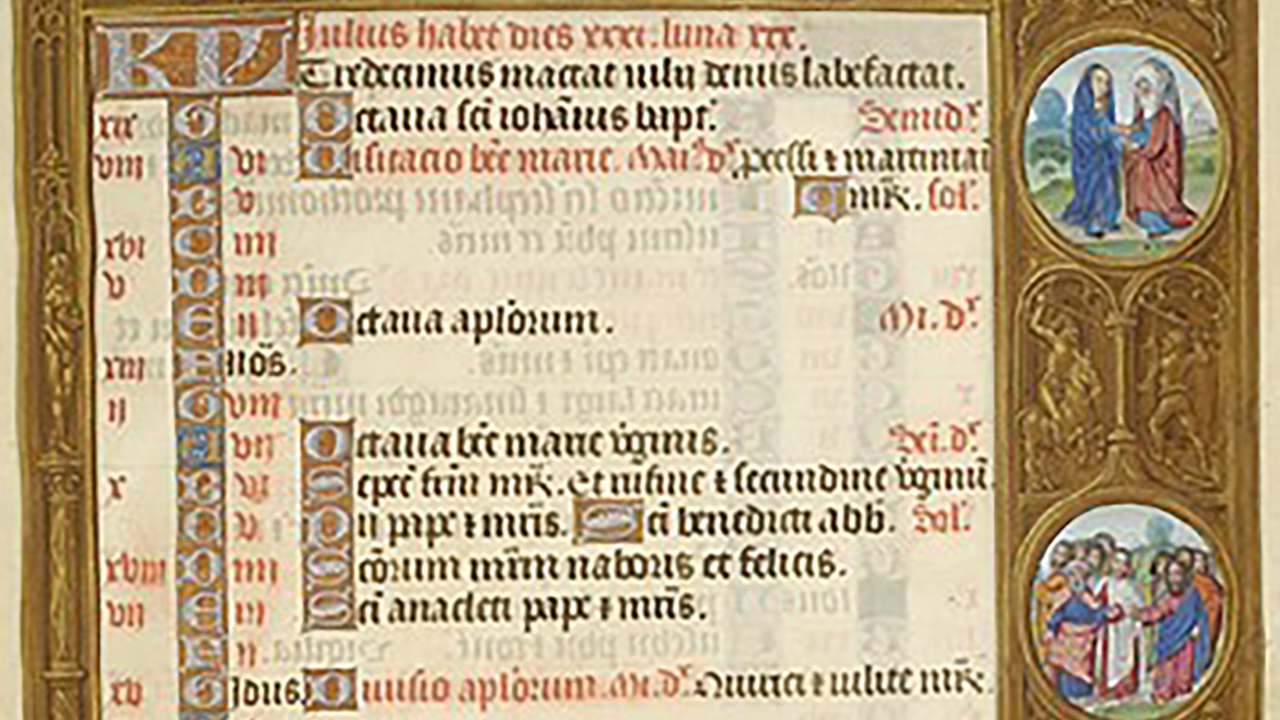
 Of the many reforms introduced by Thomas Cranmer via the 1549 Book of Common Prayer, perhaps the most significant that goes relatively un-noticed in our day is the reform of the sanctoral kalendar, the yearly round of feasts and commemorations dedicated to the saints. The medieval kalendar was chock full of saints’ days, some of which would likely be familiar to us (such as Saint Martin on November 11 or Saint Laurence on August 10) and others that would be far more esoteric or obscure (the Seven Sleepers on July 27 or the Translation of Saint Etheldreda on October 17). By some accounts, almost two thirds of the year would have been taken up with feast days of varying ranks or solemnity. Think, just for a moment, what effect awareness of all these saints’ days may have had on shaping a person’s understanding of time and its meaning: I imagine (perhaps too sentimentally) that the year would have seemed shot through with constant invitations to holiness, glittering with a depth of meaning; we would have near-daily reminders of our ancestors in the faith, friends and family in Christ to whom and with whom we mutually belong, and we would have understood quite profoundly the closeness of this family, and their ongoing loving intention to pray for us and bring our concerns to the Throne of Mercy before which it is their glory ever to rejoice and ever to beckon us.
While the reform of the kalendar was well underway in the 1530s, the 1549 BCP enshrined a radical departure from the medieval vision of time and its relationship to eternity. The only holy days mentioned in the new BCP were scripturally verifiable figures and events: feasts of our Lord and the Apostles for the most part. Part of the rationale behind this considerable change was theological: an attempt to rid the people of folk observances and customs that were seen as superstitious, grounding the common practice of the faith in a more universally biblical observance and largely eschewing local tradition. But there was a practical consideration at work here as well: with all the local celebrations and feasts (which may well vary from village to village or county to county), and particularly during harvest-time, work was simply not being done. The harvest was not being brought in with all possible efficiency given the festal interruptions, which could very well lead to waste and diminish the abundance of that harvest, especially in those years when weather or other circumstances were not as favorable as they might have been. Folks needed to get back to work.
Through the centuries, the saints have gradually made their way back into the calendars of the BCP, correcting the didactic austerity of the 16th century reforms. What did not make its way back, however, was a robust sense of the holiness of time, the practice of sanctifying time, of understanding and approaching the mystery of eternity through time, of deeply knowing the closeness of heaven and earth. For instance, we may have dimly recollected last week that Wednesday was the Feast of Saint Mary Magdalene, the Apostle to the Apostles, but there are so many things to do! So much work to get done! So much stuff to see to! And so much exhaustion to recover from! Surely, it’s nice to celebrate a feast when you can…but who really can?
Beloved, the sanctoral kalendar of the church, particularly as it’s realized in the local practice of a church, is not meant to be a distraction from all the things that need doing: it’s an invitation to pay attention to that which is never a distraction, but is always fulfillment; the One who truly gives us rest, the One who loves us and abides with us, who makes us family with each other and with a whole host of folks throughout all of time and space and who reveals, in communion and in community the holiness of time and space—Jesus Christ. In the saints, we not only see the varied shapes of grace that the Spirit of Christ takes in human lives and discover ourselves inspired and encouraged thereby, but we discover our belonging to a family, to a Reality of Love, that time and space cannot contain but which time and space joy to reveal.
The recovery of this deeper sense of time, this deeper sense of belonging, is, I think, necessary in our day. What it requires is attention, and the kalendar is a means by which attention is invited. I don’t mean to suggest to you that you celebrate all the feast days in the book! I do suggest, however, that you answer the invitation to attention. That might mean looking up how some feasts were celebrated in the past and incorporating an older practice or custom into your observance (like baking bannock bread on Michaelmas, September 29). But it will definitely involve prayer, taking a moment to rest in God, to become aware of the great cloud of witnesses that surround us at all times, to give thanks for those marvelous saints who have been the lights of the world in their several generations, to pray for the grace to follow their examples (or even to grow through their prayers) so that one day we, like them, may shine like the sun with the love of Jesus. We may even find ourselves celebrating a feast or two in church, receiving the very Body and Blood of Jesus by whom we are made one Body and united to each other and to the whole of the Communion of Saints, our family, the very hosts of heaven!
And who knows…maybe we’ll discover that time has assumed a deeper meaning for us; or better: maybe we’ll know that time is itself a revelation of the depthless mysteries of eternity.
Under the Mercy,
Mark+
View not found: content (kind: partial, module: core, post_type: post)


